e-mail :

Sequel to Group Theory
As always, we start with reminding the reader about the "Important Remark" near the end of Part III of Group Theory (To see it, click HERE and then go to (end of) Part III ), a Remark concerning the direction of reading products of group elements, like, say, apq. We read such products (from that Remark onwards) from back to front. Thus (with respect to apq) first q, then p, and then a.
Infinite two-dimensional periodic patterns, or Ornaments (sequel)
Sequel to the Plane Group P4mm
In the previous two documents we were analysing a P4mm / P4gm antisymmetry pattern, derived from a square tiling, depicted in Figure 3a of Part XXXVII . Here we will continue this analysis.
Let us repeat the last alinea of the previous document (and then continue our investigation) :
We know that the symmetry of the pattern of blue elements is according to the plane group P4gm , and we must now determine whether it is a subgroup of the generating P4mm pattern. In fact this is -- as we shall see -- directly evident. It is, however, still instructive to consider in detail the symmetry content of both patterns. For this we must look to the symmetry elements (glide lines, mirror lines, rotation axes) in these patterns. This we will do in the next document, where we pick up the numbering of the Figures from where we left it here (47). Well, this is the "next document", and we will now continue our investigation.
To begin with, the next Figure shows a possible choice of unit mesh of the subpattern of blue elements.
Figure 48. A possible choice of unit mesh of the subpattern of blue elements.
We now indicate the distribution of symmetry elements (glide lines, mirror lines and rotation axes) of our subpattern of blue elements, and compare it with that of the generating P4mm pattern.
Figure 49.
Left image : Distribution of glide lines in the subpattern of blue elements (Figure 48 ), shown for four unit meshes (one highlighted).
Right image :
Distribution of glide lines in the generating P4mm pattern (Figure 34 ), shown for four unit meshes (one highlighted). See for these glide lines also Figure 29 .
The above Figure shows that the subpattern of blue elements has diagonal glide lines as in the generating P4mm pattern, but at different locations. It has moreover vertical and horizontal glide lines, which are absent in the generating P4mm pattern.
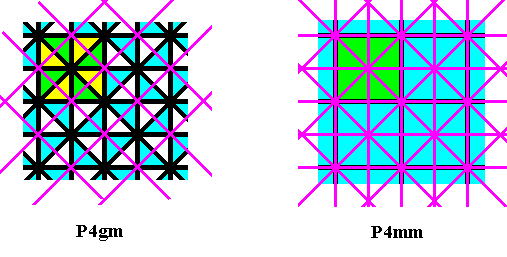
Figure 50.
Left image : Distribution of mirror lines in the subpattern of blue elements (Figure 48 ), shown for four unit meshes (one highlighted).
Right image :
Distribution of mirror lines in the generating P4mm pattern (Figure 34 ), shown for four unit meshes (one highlighted).
The above Figure shows that the subpattern of blue elements possesses diagonal mirror lines, as does the generating pattern, but at different locations. It has no vertical or horizontal mirror lines.
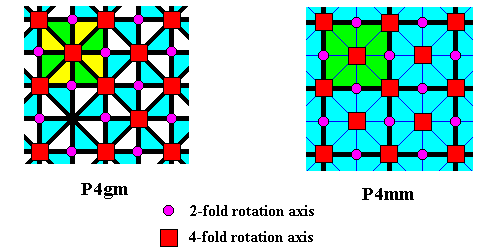
Figure 51.
Left image : Distribution of rotation axes in the subpattern of blue elements (Figure 48 ), shown for four unit meshes (one highlighted).
Right image :
Distribution of rotation axes in the generating P4mm pattern (Figure 34 ), shown for four unit meshes (one highlighted).
From the above Figure it is clear that the distribution of rotation axes is the same in both patterns (viz. subpattern of blue elements and generating P4mm pattern).
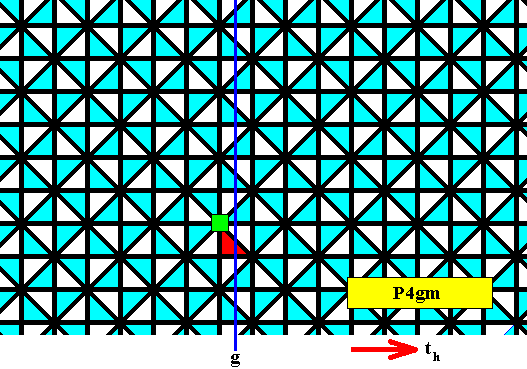
In Figure 49 we see that the pattern of blue elements has horizontal and vertical glide lines. They represent horizontal and vertical glide reflections. These are not present in the generating P4mm symmetry pattern, so it seems that the subpattern has additional group elements -- recall that group elements are (symmetry) transformations -- with respect to te generating P4mm pattern and thus cannot be a subgroup of the latter. But this is only apparently so : The group elements that can -- from the identity element -- be reached by these glide lines do not represent new elements, i.e. elements not present in the generating P4mm pattern. They represent elements that are also present in the generating P4mm pattern. The next Figures elucidate this for a vertical glide line. To do this we first generate the subpattern of blue elements from its identity element ( The area that can represent the latter element is the same as in the generating P4mm symmetry pattern as well as in the antisymmetry pattern derived from it).
Figure 52. Subpattern of blue elements, as in Figure 48 , and its (chosen) set of generators {p, g,} viz., an anticlockwise rotation of 900 about the point indicated by a small solid green square, and a glide reflection in the line g . The identity element is indicated (red).
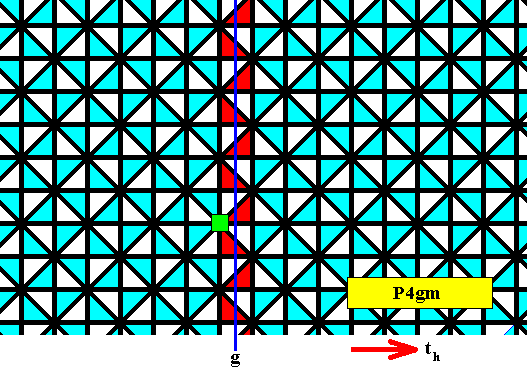
Figure 53. First phase of the generation of the subpattern of blue elements.
The generating glide reflection g is repeatedly applied to the identity element. The result is a vertical row of elements.
The next move (Second Phase) is a rotation of all the obtained elements. We first show this for two elements (next two Figures), and then for the rest.
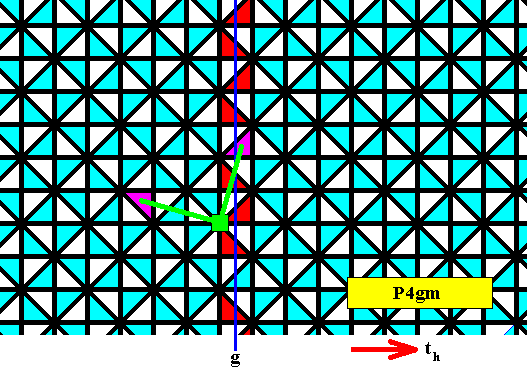
Figure 54. Generating the subpattern of blue elements.
Application of the generating rotation p ( 900 anticlockwise rotation about the axis indicated by the small solid green square) to an already existing element.
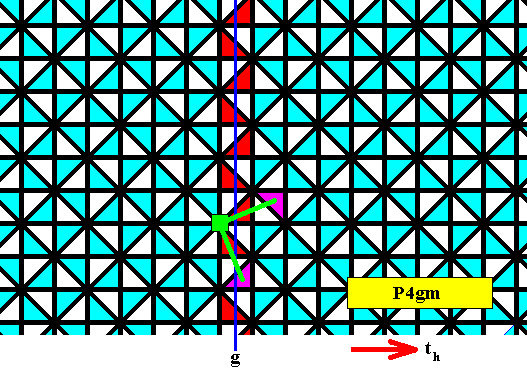
Figure 55. Generating the subpattern of blue elements.
Application of the generating rotation p to a second already existing element.
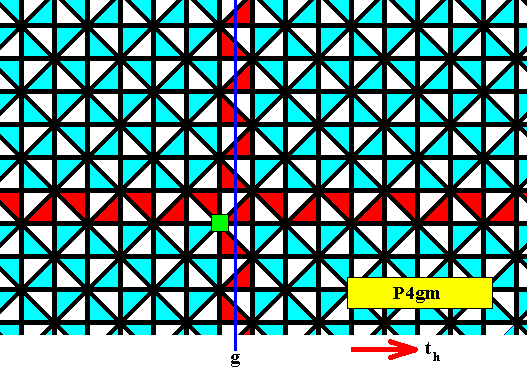
Figure 56. Second phase of the generation of the subpattern of blue elements.
The generating rotation p is applied to the rest of the already existing elements. The result is a horizontal row of elements.
The next move ( Third Phase) is the repeated application of the glide reflection g to all already existing elements. It completes the pattern. We show it with one (already existing) element at a time, till it is clear that indeed the pattern can be so completed (Figures 57 -- 63).
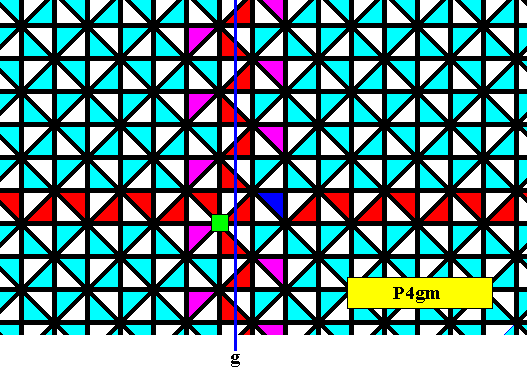
Figure 57. Generating the subpattern of blue elements.
Application of the generating glide reflection g to an already existing element (dark blue).
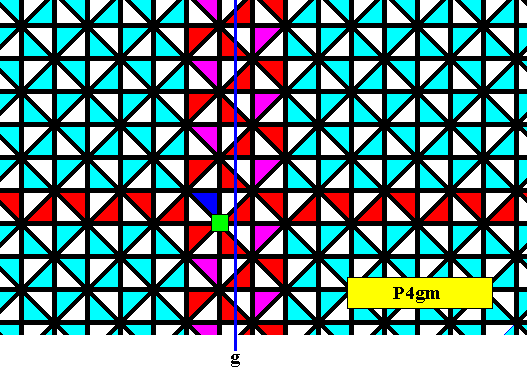
Figure 58. Generating the subpattern of blue elements.
Application of the generating glide reflection g to a second already existing element (dark blue).
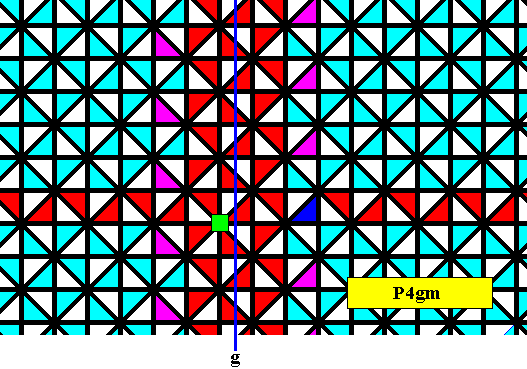
Figure 59. Generating the subpattern of blue elements.
Application of the generating glide reflection g to a third already existing element (dark blue).
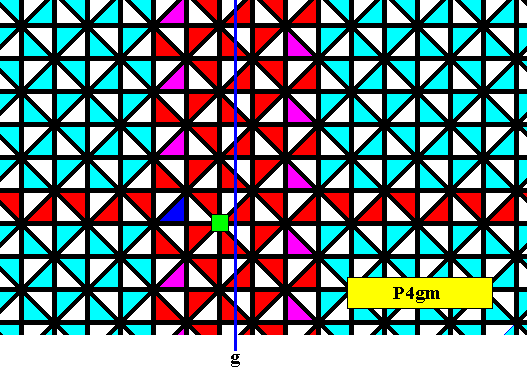
Figure 60. Generating the subpattern of blue elements.
Application of the generating glide reflection g to a fourth already existing element (dark blue).
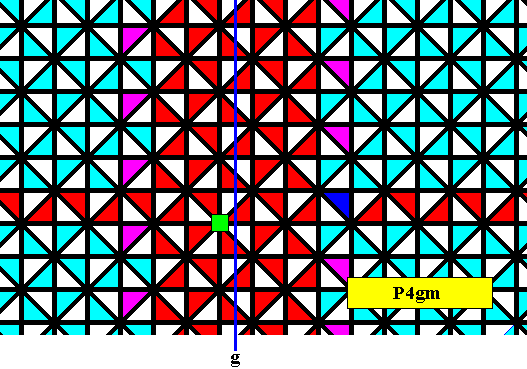
Figure 61. Generating the subpattern of blue elements.
Application of the generating glide reflection g to a fifth already existing element (dark blue).
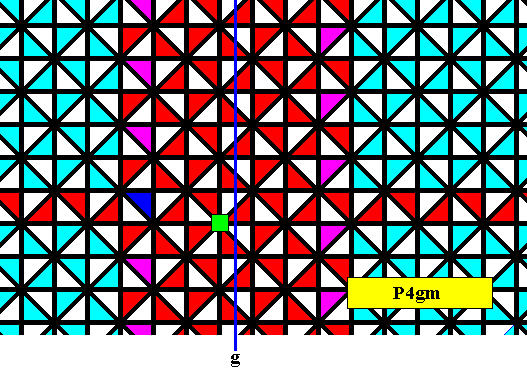
Figure 62. Generating the subpattern of blue elements.
Application of the generating glide reflection g to a sixth already existing element (dark blue).
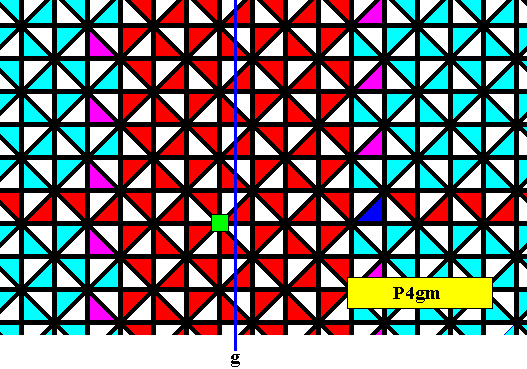
Figure 63. Generating the subpattern of blue elements.
Application of the generating glide reflection g to a seventh already existing element (dark blue).
It is clear, that continuing this will yield the whole pattern, which means that the subpattern of blue elements can be generated by the elements p (rotation) and g (glide reflection), and thus that all its (non-identity) elements can be expressed in terms of these two generators (In fact, also the identity element can be expressed in those terms : 1 (identity element) = p4 ).
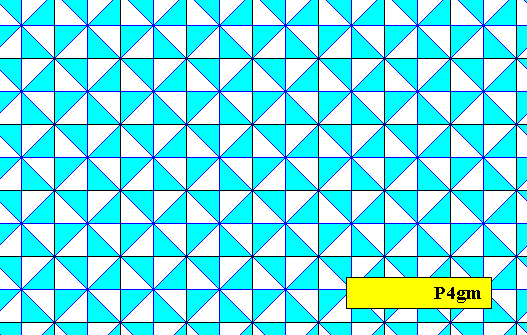
If we, in the just generated pattern, restore red to blue, we get our subpattern of blue elements. In the next Figure it is as such given. In it the boundaries of areas representing group elements are indicated by normal (thin) lines.
Figure 64. Subpattern of blue elements, as in Figure 48 , but now the group element boundaries drawn with normal (thin) lines. Compare with the corresponding antisymmetry pattern from which this subpattern was isolated : Figure 21 of Part XXXVII .
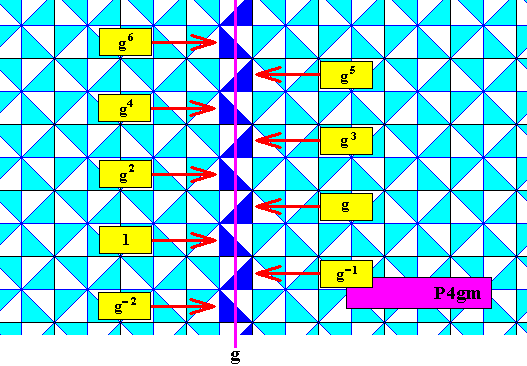
As we said above, the subpattern of blue elements has horizontal and vertical glide lines, not present in the generating P4mm pattern (Figure 49 ). And so it seemed that this subpattern of blue elements has additional group elements with respect to the generating P4mm pattern, implying that it cannot be a subgroup of the latter. But this is only apparently so. Let's take a vertical glide line of the subpattern. It represents repeated vertical glide reflections. Any of such a glide reflection could be (chosen as) a generator of the pattern. So we take our generating vertical glide reflection g as established above (Figure 52 ). The elements generated by applying it repeatedly to the identity element can be expressed in terms of it, namely . . . g-2, g-1, 1 (= g0), g, g2, g3, g4, g5, g6, . . . etc. See next Figure.
Figure 65. Some elements of the subpattern of blue elements (as in Figure 64 ) expressed in terms of the generator g .
These same elements can also be generated by the generator elements of the generating P4mm symmetry pattern. A generator set {mse, p, th} (reflection in the line mse , 900 anticlockwise rotation, and horizontal translation) was chosen in Figure 7 of Part XXXVII . We give it here again, together with the motif features of this generating P4mm pattern emphasized.
Figure 66. Generating P4mm pattern and its generators mse, p, and th . Motif features (black) emphasized. Identity element indicated (yellow).
We will now generate the elements indicated in Figure 65 with the generators of the generating P4mm symmetry pattern. There we will indicate the generating reflection mse simply by m , and the generating horizontal translation th simply by t .
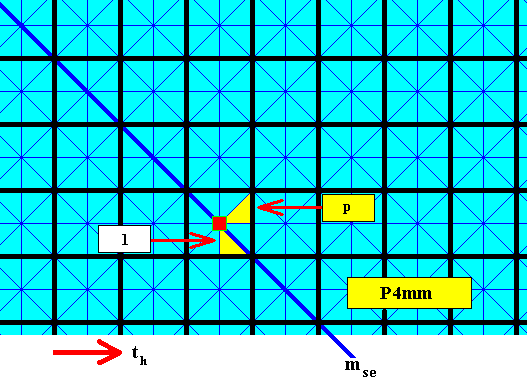
Figure 67. Generating the elements of Figure 65 with the generators of the generating P4mm symmetry pattern (Figure 66 ). The identity element was given.
A first element p is generated, which is the same as the element g in the subpattern P4gm of blue elements (Figure 65 ).
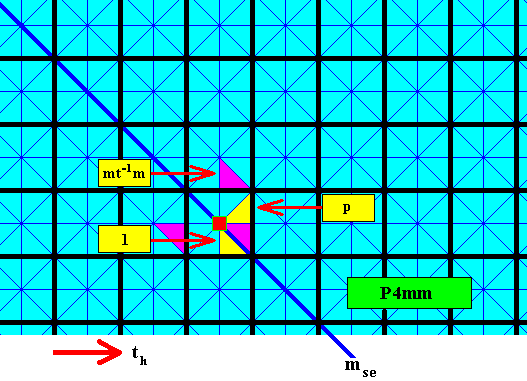
Figure 68. Generating the elements of Figure 65 with the generators of the generating P4mm symmetry pattern (Figure 66 ).
By applying the generating reflection m to the identity element, and then applying to the result (purple) the generating translation t to the left (i.e. applying t-1 ), and, finally, applying to this result (purple) the generating reflection m , gives the element mt-1m , which is equivalent to the element g2 of Figure 65 .
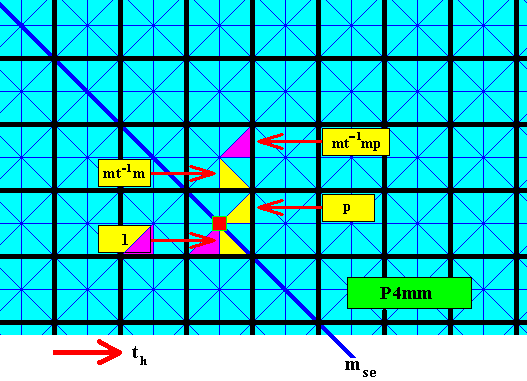
Figure 69. Generating the elements of Figure 65 with the generators of the generating P4mm symmetry pattern (Figure 66 ).
Applying the generating reflection m to the (already obtained) element p , and applying to the result (purple) the generating translation to the left, and then, finally, applying to this result (purple) the generating reflection m , gives the element
mt-1mp , which is equivalent to the element g3 in Figure 65 .
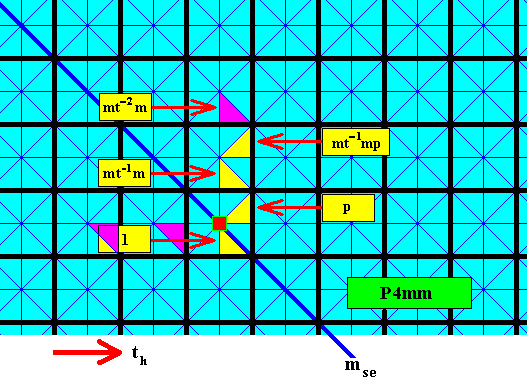
Figure 70. Generating the elements of Figure 65 with the generators of the generating P4mm symmetry pattern (Figure 66 ).
Applying the generating reflection m to the (already obtained) element mt-1m , and then apply to the result (purple) the generating translation to the left, and then, finally, apply to this result (purple) the generating reflection m , we get the element mt-1mmt-1m , which is mt-1t-1m , which is mt-2m , which is equivalent to the element g4 of Figure 65 .
It is clear that the transformation mt-1m is in fact a vertical translation (upward). This makes it easy to proceed with the generation of the elements of Figure 65 .
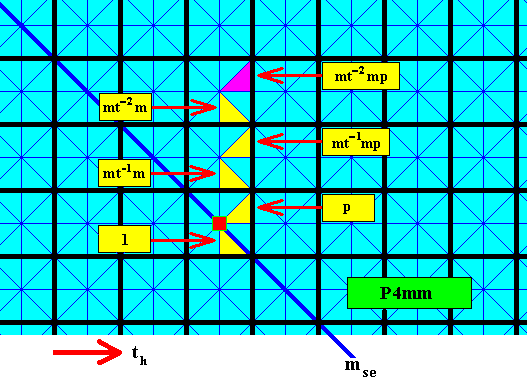
Figure 71. Generating the elements of Figure 65 with the generators of the generating P4mm symmetry pattern (Figure 66 ).
Applying the transformation mt-1m (which -- as has been said -- is a vertical translation) to the element mt-1mp gives the element mt-1mmt-1mp = mt-1t-1mp = mt-2mp , which is equivalent to the element g5 of Figure 65 .
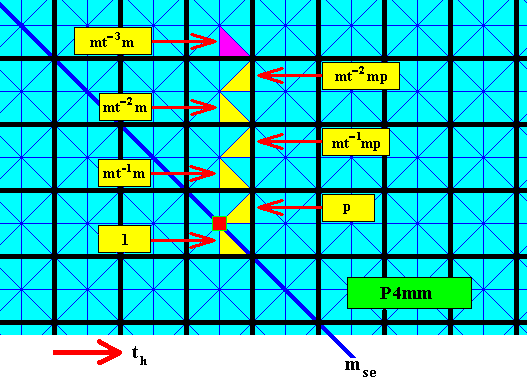
Figure 72. Generating the elements of Figure 65 with the generators of the generating P4mm symmetry pattern (Figure 66 ).
Applying the transformation mt-1m (vertical translation) to the element mt-2m gives the element mt-1mmt-2m = mt-3m , which is equivalent to the element g6 of Figure 65 .
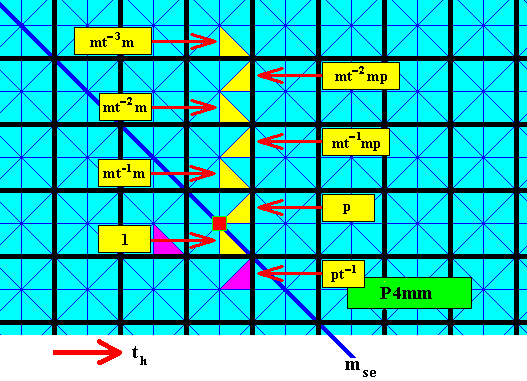
Figure 73. Generating the elements of Figure 65 with the generators of the generating P4mm symmetry pattern (Figure 66 ).
Applying the translation t-1 to the identity element, and then applying to the result (purple) the generating rotation p , gives the element pt-1 , which is equivalent to the element g-1 of Figure 65 .
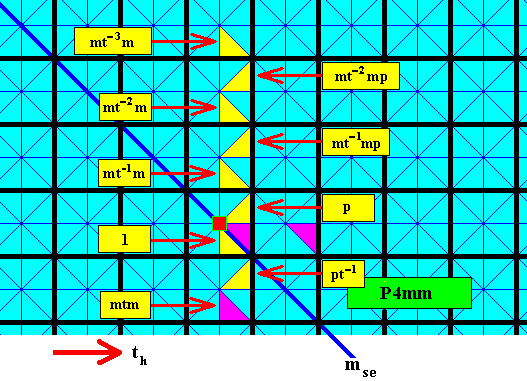
Figure 74. Generating the elements of Figure 65 with the generators of the generating P4mm symmetry pattern (Figure 66 ).
Applying the generating reflection m to the identity element, and then applying to the result (purple) the generating translation t , and then, finally, applying to the result (purple) the generating reflection m , gives the element mtm , which is equivalent to the element g-2 of Figure 65 . The element mtm is the same as a vertical translation in the downward direction.
So the final result, with respect to generating the nine elements of Figure 65 , is the following (And of course all the (remaining) elements, generated by repeatedly applying the glide reflection g to the identity element in the mentioned Figure, could (also) be generated by the generators of our P4mm pattern) :
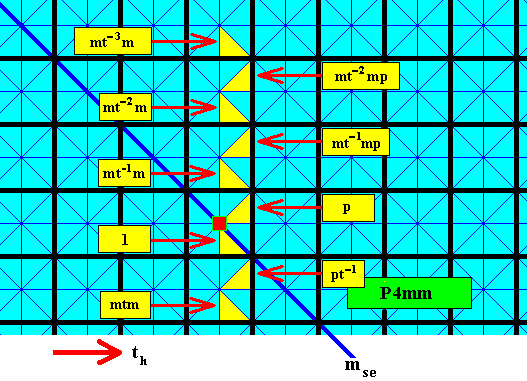
Figure 75. The eight labelled elements of Figure 65 ( g-2, g-1, g , g2, g3, g4, g5, g6 ) are generated with the generators of the generating P4mm symmetry pattern (Figure 66 ). The process can be extended to all the rest of the elements (already) generated by repeatedly applying the glide reflection g to the identity element, i.e. to all elements g-n and gn , where n = all non-zero integers.
From the above it is clear that the vertical (and, by implication also the horizontal) glide lines present in the subpattern of blue elements, as shown in Figure 49 , do not imply new group elements with respect to the generating P4mm pattern.
So it is clear that the subpattern of blue elements is a group with P4gm structure, and is a subgroup of the (group representing the) generating P4mm pattern, from which our antisymmetry pattern (Figure 21 of Part XXXVII ) was derived. So the symbol of the latter must read P4mm / P4gm .
The mentioned P4mm/P4gm antisymmetry pattern was -- in Part XXXVII -- derived by from the generating P4mm symmetry pattern (Figure 34 of Part XXXVIII ) by replacing the generating reflection mse by its corresponding antisymmetry reflection e1mse , where the antiidentity transformation e1 was interpreted as the color permutation (Blue Red) (cycle notation) with respect to the background color, which initially was set to be blue. See Figure 20 in Part XXXVII .
In Part XXXIII we had taken a different generating pattern, but also having P4mm structure, i.e. a P4mm pattern with different motifs as depicted in Figure 2 of Part XXXI . Form it we derived an antisymmetry pattern according to precisely the same specifications as just mentioned (i.e. by replacing the generating reflection mse by its corresponding antisymmetry reflection). It was depicted in Figure 9 in Part XXXIII , and its symbol was established as P4mm / P4 .
Let us reproduce the Figures of these two antisymmetry patterns and their respective generating P4mm symmetry patterns.
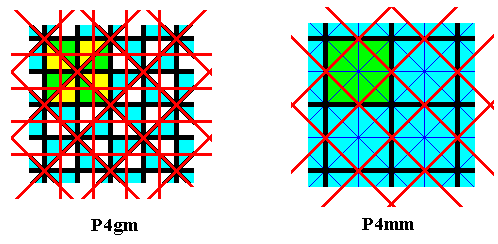
Figure 76. The generating P4mm symmetry pattern from which the antisymmetry pattern (again given in the next Figure) was derived (Part XXXVII). All the lines, thick or thin, are group element boundaries. The thick black lines moreover indicate the pattern's motifs. The motif is in fact the content of the square enclosed by those (thick) lines plus these boundaries themselves. The latter are given as thick lines, but only so in order to distinguish them from the other lines that only take part in indicating the boundaries of the areas representing group elements.
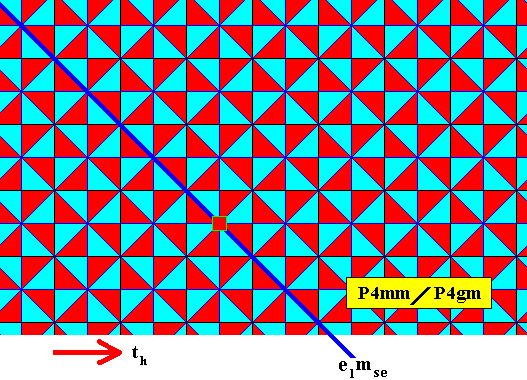
Figure 77. Antisymmetry pattern derived from the generating P4mm pattern of the previous Figure by replacing the generating reflection mse by its corresponding antisymmetry reflectiom e1mse .

Figure 78. The generating P4mm symmetry pattern from which an antisymmetry pattern was derived (in Part XXXIII), and which is reproduced in the next Figure.

Figure 79. Antisymmetry pattern derived (Part XXXIII) from the generating P4mm pattern depicted in the previous Figure by replacing the generating reflection mse by its corresponding antisymmetry reflection e1mse ).
So it turns out that two different -- but isomorphic -- antisymmetry groups (viz. the patterns representing them) namely P4mm / P4gm and P4mm / P4 , have been derived according the same specifications (replacement of generating reflection by antisymmetry reflection) from (generating) symmetry patterns both having P4mm structure, but differing in their motifs.
In the next document we will give an example of an antisymmetry pattern derivable from a P4mm symmetry pattern and found in Neolithic art.
e-mail :
To continue click HERE for further group theoretic preparation to the study of the structure of three-dimensional crystals (crystallography) and the basic symmetry of organisms (promorphology).
Back to 3-dimensional crystals (conclusion), Organic Tectology and Promorphology
Back to the Beginning of the present Series on Subpatterns and Subgroups. There : LINK to Part XXVII
Back to Part XXVIII of the present Series
Back to Part XXIX of the present Series
Back to Part XXX of the present Series
Back to Part XXXI of the present Series
Back to Part XXXII of the present Series
Back to Part XXXIII of the present Series
Back to Part XXXIV of the present Series
Back to Part XXXV of the present Series
Back to Part XXXVI of the present Series
Back to Part XXXVII of the present Series
Back to Part XXXVIII of the present Series